«Don’t Ask What It’s Like for a Mother in Exile Without Her Children»: The Story of Anna Papaj
We are launching a series of interviews with former political prisoners. How do they readapt to normal life after imprisonment, and what do they dream about? Our first story is about Anna Papaj. Today, she lives in Poland, longs for the day she will be reunited with her children, and dreams of opening her own café in Minsk.
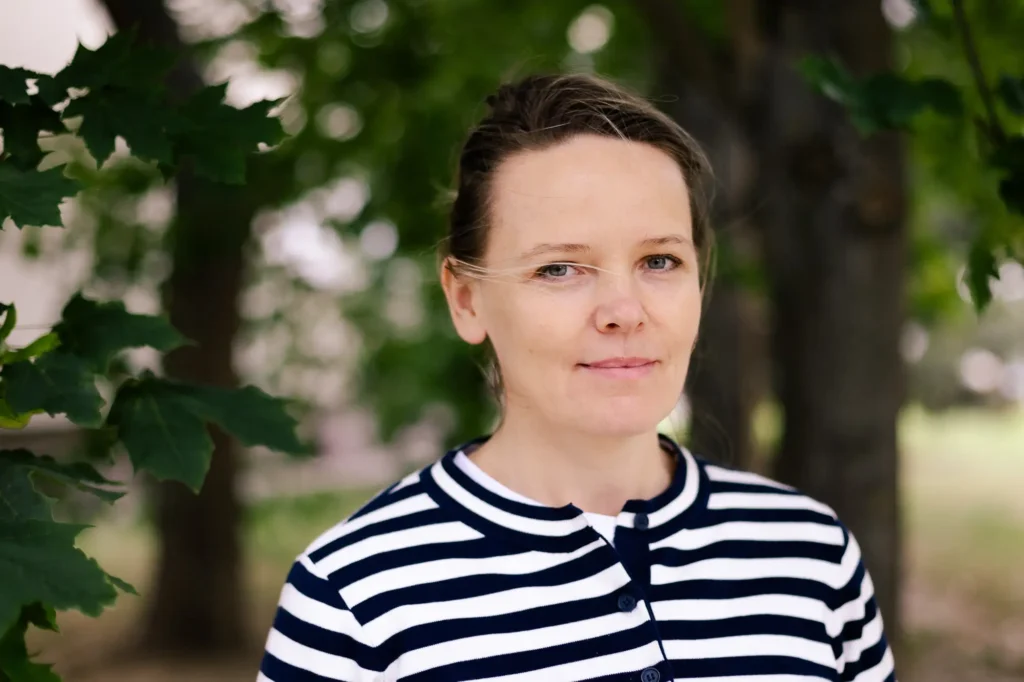
Anna Papaj. Photo: Politzek.me
Homeless, Jobless, Childless
Anna Papaj is 46 years old. She is a mother of three. Originally from Zhlobin, she graduated from the Minsk State Linguistic University and lived in Minsk for many years. Almost her entire career was spent in the banking sector, where she worked in customer service and financial consulting.
For making donations, a Belarusian court sentenced Anna Papaj to two and a half years in prison. She endured a pretrial detention center and Penal Colony No. 4 in Homel. In December 2025, following a visit by a U.S. delegation to Minsk, she was among a group of political prisoners deported from Belarus through Ukraine to Poland. This marked the beginning of a new chapter in Anna’s life: a life without a home, without her familiar career, and without the chance to hold her children in her arms.
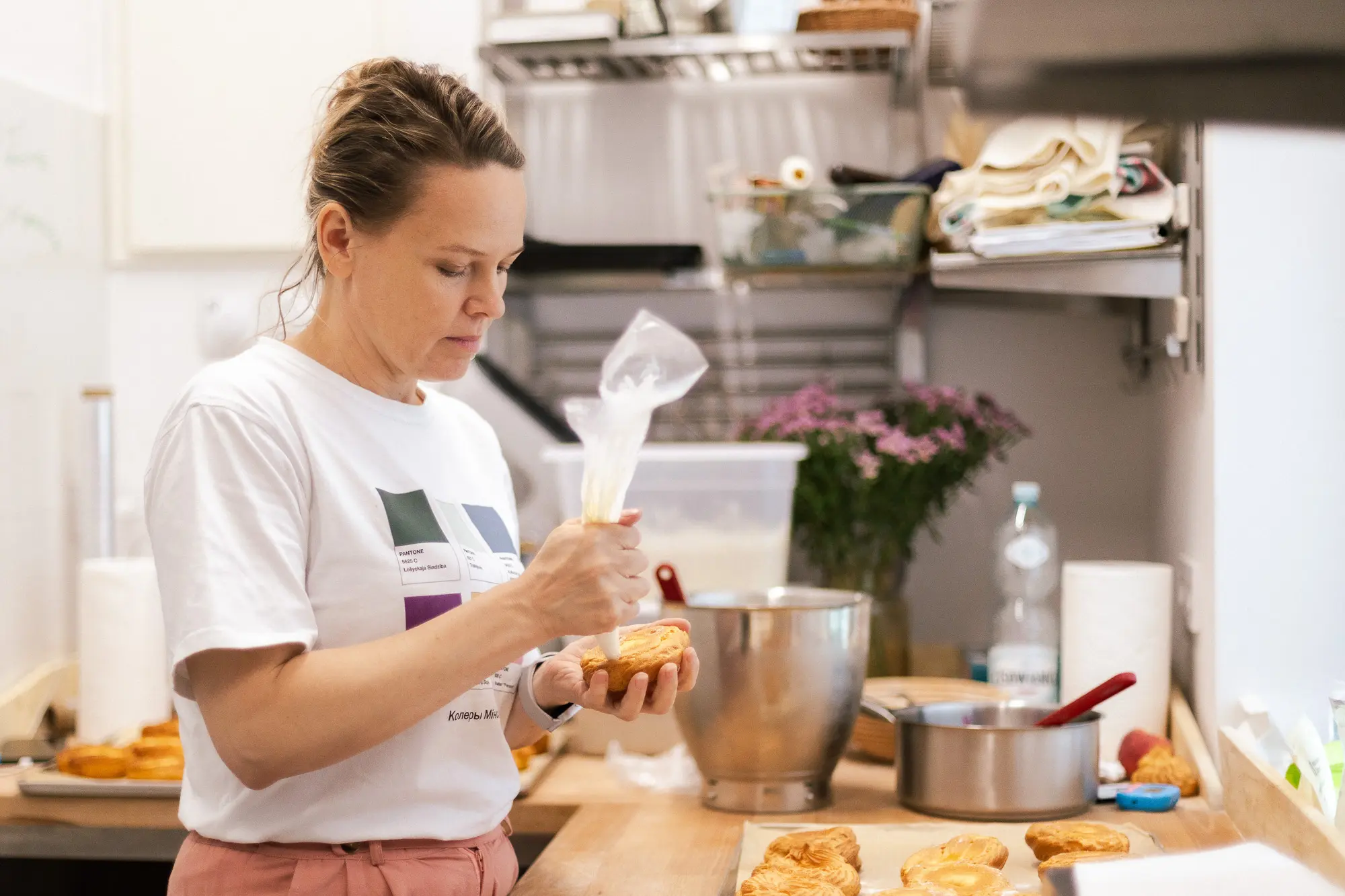
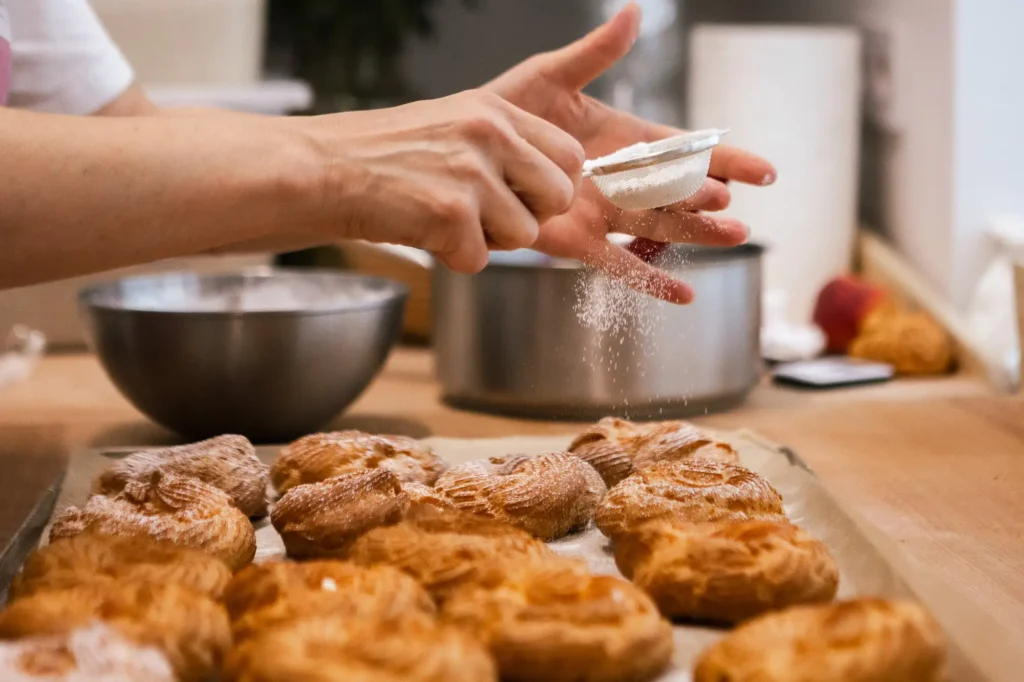
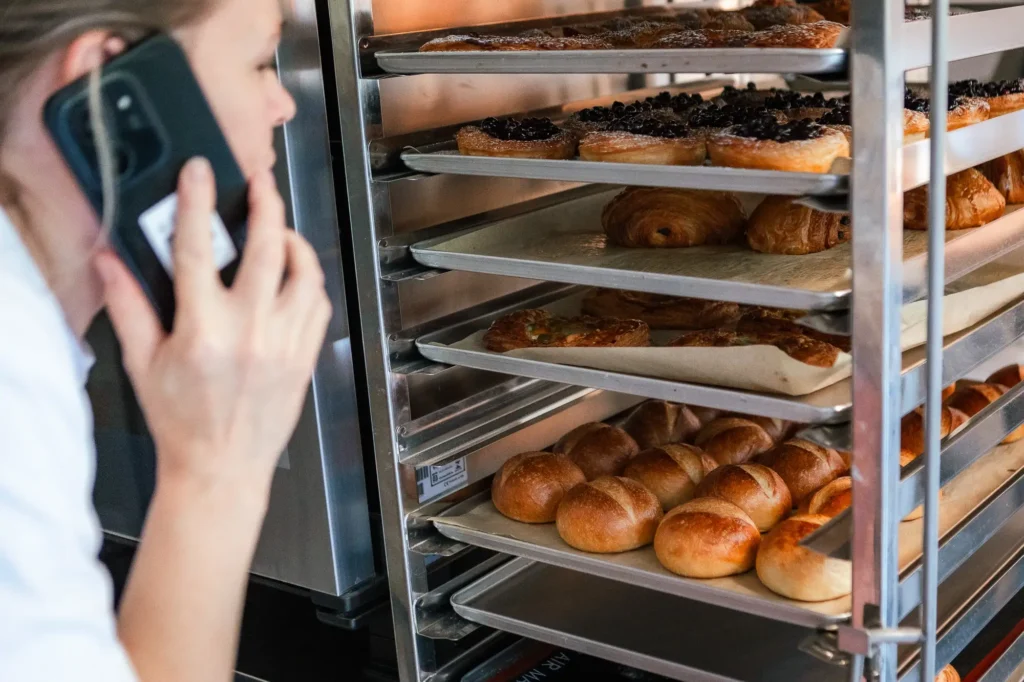
Today, Anna Papaj works at a Warsaw bakery, baking croissants, while also creating custom cakes and desserts.
Anna at work in a bakery. Photo: Politzek.me
«Rain, Rain, Pour All Day, Drive the Old Woman Away!»
Simply waking up in the morning, stepping outside, buying a coffee, and calling your loved ones—for most people, these are ordinary daily routines. For Anna, however, they are a profound luxury, one for which she paid a devastatingly high price. She admits that her resilience is something she brought with her from childhood.
– I had a good childhood. I had many things other kids didn’t: an «Aist» bicycle, ice skates that always fit perfectly, and skis. My parents spent a lot of time with us. Every year, we went to the seaside. I felt incredibly happy.
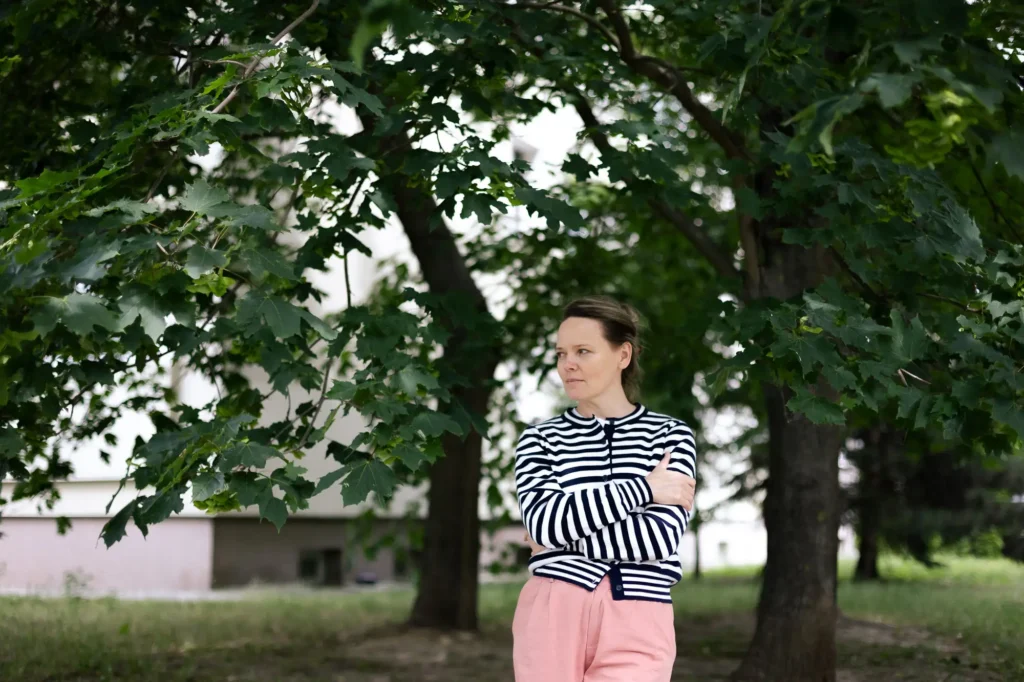
Anna Papaj. Photo: Politzek.me
What did she dream about as a child? Anna smiles as she recalls the funny wishes of a little girl who had everything.
– My dad ran a farm. Whenever my brother, sister, and I had to weed the strawberry patches, we would constantly wish for rain. Remember that old rhyme: «Rain, Rain, Pour All Day, Drive the Old Woman Away!»? It was pure bliss whenever the rain finally started!
The Colony Doesn’t Haunt My Dreams So Often Anymore
At the time of this interview, five months had passed since her release. According to Anna, the memories of her imprisonment are still close, but they no longer control her thoughts.
– Bit by bit, the colony and the pretrial detention center are fading from my memory. They don’t haunt my dreams as often as they used to. There is a real sense that this chapter is finally behind me. A new life is beginning.
«I understand that I am safe now, and I no longer have to fear people in uniform.»
Recently, I saw a police van in Warsaw. It was very sleek and modern, but it sparked nothing more than purely aesthetic interest in me.»
The true realization of freedom came the day after her release.
– That was the first time I was able to make a video call to my children and parents. It was exactly at that moment that the feeling hit me: it’s all over.
Anna Papaj. Photo: Politzek.me
The Day of My Release Looked So Different in My Imagination
While in prison, Anna often pictured the day she would finally walk free. But reality turned out to be completely different from what she had imagined.
– The most unexpected part was finding myself here instead of at home. I never expected things to happen this way.
Her forced exile came as the biggest surprise.
– And then, of course, there was Ukraine. I never thought I would get to go there before the war ended, but it turned out otherwise.
One of Anna’s most powerful memories from her first days of freedom remains the welcome event organized for the released political prisoners.
– We were welcomed at the Center for Belarusian Solidarity in Warsaw. At the time, it felt like something completely natural. But later, I realized the tremendous amount of work that went into organizing a reception for nearly a hundred people. Giving everyone individual attention, making sure everyone was fed, finding words of support for each person—it is something I will never forget.
«How are you holding up without your children? Do you miss them?»
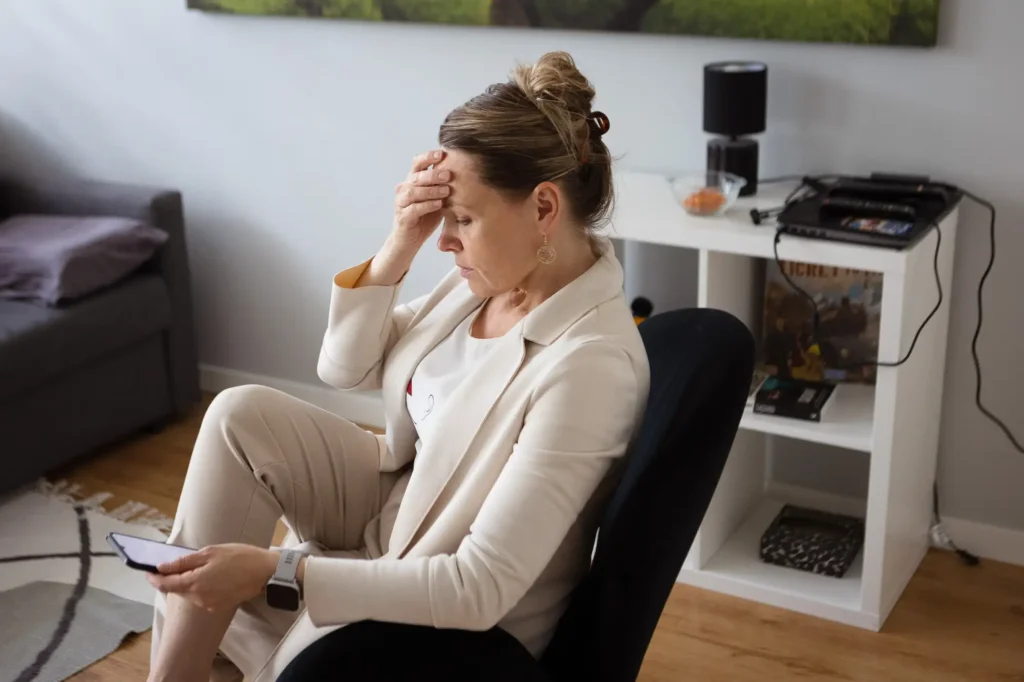
Anna says that time flows differently in prison. You are left entirely alone with yourself, your fears, and your thoughts. Anna tried not to dwell on the past:
– I kept thinking that everything passes, and this too shall pass. I told myself that someone out there was having an even harder time than I was. After all, I was alive. I thought about my mother, my children, and the man I love who was waiting for me. I thought about the future. I even calculated how old I would be when I finally got out.
It turned out that these thoughts of the future became her anchor.
– I was picturing what lay ahead. Memories, on the other hand, often left me feeling despondent.
«When you start looking back at your past life, you realize just how much you have lost. It is incredibly painful. I mourn every single day spent in confinement. Every one of those days could have been filled with happiness.»
Her ultimate dream while in prison was freedom.
– Of course, I dreamed of freedom. And only after that, of reuniting with my loved ones. I imagined these two things separately.
However, after her release, it turned out that freedom does not always mean coming home. For Anna, any questions about her children are agonizing; the subject is still a bleeding wound.
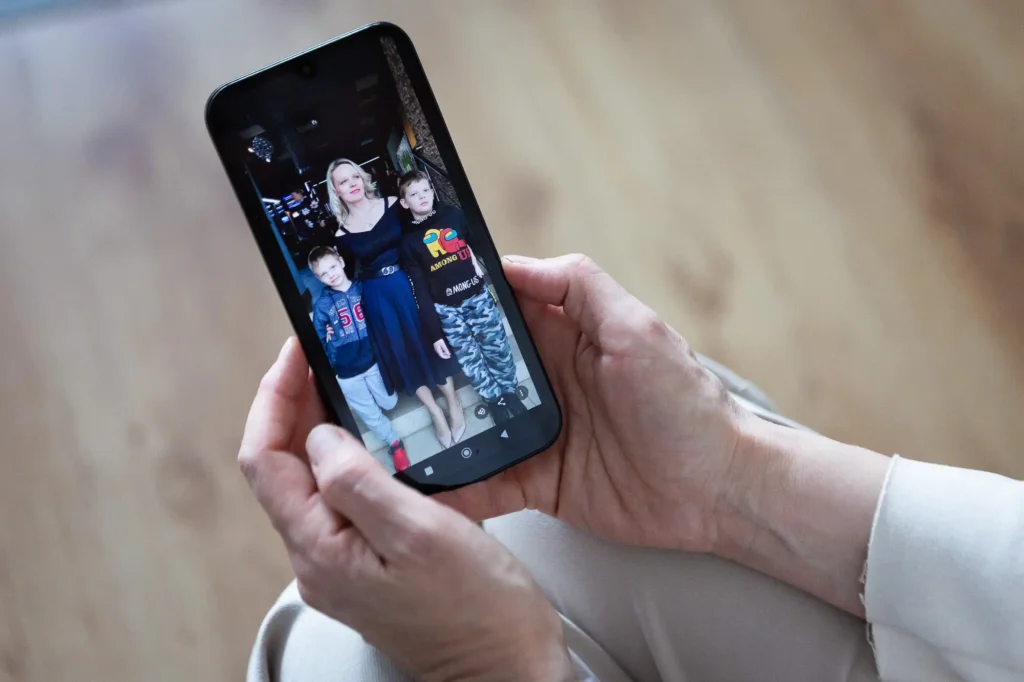
Anna shows photographs of her sons, whom she misses very much. Photo: Politzek.me
– People often ask me, «How do you hold up without your children? Do you miss them?»
«I don’t understand why people ask things like that. It is heartbreakingly difficult for me to be here without them. My heart literally bleeds.»
Anna goes out of her way to avoid walking past schools and kindergartens. She deliberately steers clear of such places.
– Whenever I do happen to pass by one, I can’t help but think that my sons could be going to this school too, coming home every day. But I am stripped of that. They are growing up without me.
«This is the most terrifying thing—being separated from your children. So please, don’t ask mothers in exile how they are doing without their kids. It is SO HARD that you don’t even need to know.»
Letters Are Pure Happiness
In prison, support is not measured solely by money or material goods. Sometimes, support is something you can hold in your hands—in the form of a letter.
– The letters and care packages from my family were a massive help.
While I was in the pretrial detention center, letters from the man I love managed to get through. Then, there was a brief period after the trial when letters from friends were allowed. It was pure happiness.
Once I was moved to the colony, however, writing letters was only permitted with immediate family members.
– I have a large family. My mother, father, brother, sister, and eldest daughter all wrote to me. My mother would pass along messages and greetings from the man I love and from my friends. Thanks to that, I knew I wasn’t forgotten, and that people were waiting for me.
Anna says that this kind of support continues to carry her even now.
– I get help from friends, friends of friends, and complete strangers who contribute to fundraisers for former political prisoners. The volunteers help a lot too. This support is incredibly tangible and so deeply important. I am endlessly grateful to everyone.
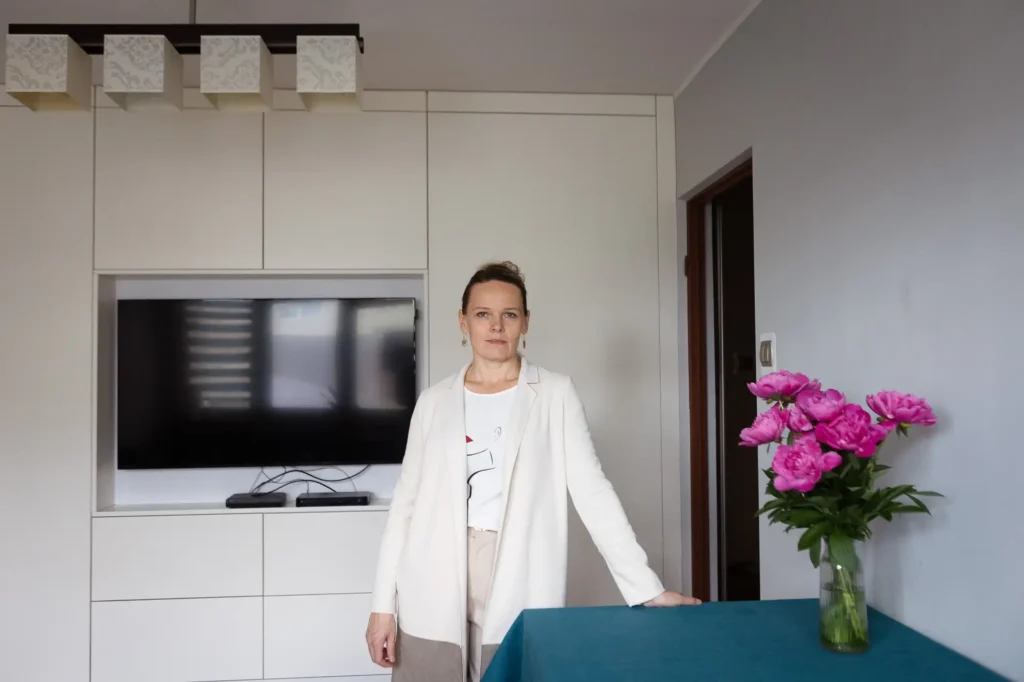
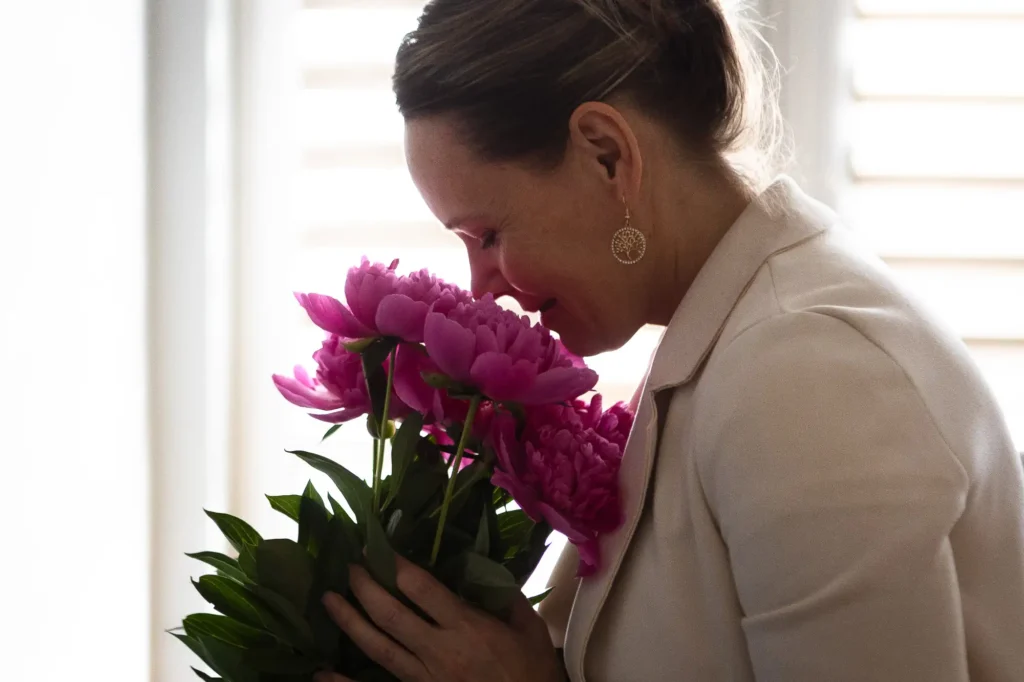
Anna bought these peonies for herself. «I love their fragrance. Flowers bring me so much joy.» Photo: Politzek.me
«It Turned Out I’m Not That Easily Broken»
Anna speaks about her imprisonment quite calmly. Yet, there are still things that stir up incredibly powerful emotions.
– I didn’t know I would be able to survive all of this. It turned out that I am not that easily broken.
The most terrifying ordeal wasn’t the physical discomfort or hardships, but human betrayal.
– In there, they call it snitching. The system of pressure is built in such a way that many people break and start informing on their fellow inmates.
«It is especially brutal for political prisoners. Many can’t take it. I did. I suppose that’s a small reason to be proud.»
Unexpectedly even to herself, Anna discovered a talent for sewing while in the colony.
– It turns out I’m actually quite good at sewing. My school home economics classes didn’t go to waste. For five months, I worked at the factory making jackets. They trusted me with fairly complex tasks, like hemming sleeves and putting hoods together. And I did an excellent job. My unexpected release cut short my «career» as an aspiring seamstress.
Anna Papaj. Photo: Politzek.me
Even in the colony, Anna’s sweet tooth never faded.
– Of course, you can’t properly bake anything there since there’s no oven. But in my opinion, they could have at least put a few stoves in the kitchen. After all, every unit has washing machines and refrigerators.
Still, we made cakes anyway—using store-bought cake layers, condensed milk, butter, and nuts. Sometimes they turned out truly delicious and beautiful.
I made a dessert out of biscuits, cottage cheese, butter, and sour cream. However, my desserts didn’t last long because I wasn’t receiving any money transfers, and you can’t exactly live it up on a local prison salary.
My very first paycheck was tiny: in July, for 20 days of work, I earned just 4 rubles. In August, it was 27 rubles; in September, 35 rubles; in October, around 35 to 40 rubles. In November, our brigade’s performance dropped, so my pay went down to 29 rubles.
* 1 ruble equals 0.31 euros. This means Anna’s first paycheck amounted to just 1.25 euros.
I bought coffee, sugar—1 kg (that was the limit), apples, biscuits, cottage cheese, sour cream, wafers, ice cream a couple of times during the summer, and once, a Coca-Cola. It was an absolute treat—cornflower-blue ice cream with Coke. In the colony, you are only allowed to eat in the unit kitchen; it’s banned everywhere else, but it was amazing nonetheless. I went to the store once a month right after payday, and the groceries lasted me about a week.
* Political prisoners in Belarusian colonies do not receive money transfers. Since 2023, the authorities have been actively adding political prisoners to lists of «individuals involved in extremist activities.» Being placed on this list blocks all financial operations for an inmate: he or she loses the right to use their personal account, and transfers are either rejected by the colony administration or blocked by banks due to internal policies.
Sweets Relieve Stress
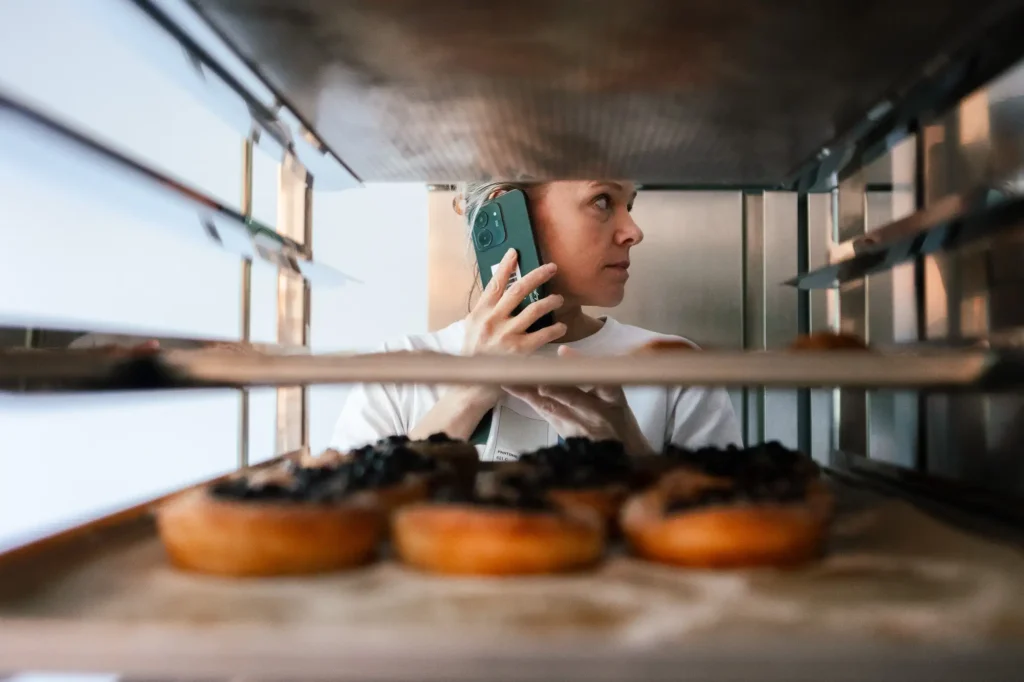
Today, Anna is working in a bakery, baking croissants. Baking was her hobby even before her arrest, and now it is gradually turning into her life’s work.
– For me, it’s very simple: sweets and baking are a source of pleasure and joy. You can live without them, of course, but what kind of life would that be?
I can’t last long without sweets, that’s for sure. Especially in prison. By the way, everyone in there eats sweets, and a lot of them. And nobody gains weight.
«Sweets are really good at relieving stress. I knew this before, but prison confirmed it for good. If you are going through a hard time, feeling sad, or facing severe stress, don’t be afraid to eat a piece of your favorite cake. The world instantly becomes a brighter place.»
Baking is a part of life for Anna. A delicious and beautiful life. She baked her first cakes together with her sister.
Anna at work in a bakery. Photo: Politzek.me
– What kind of cakes exactly? It was Soviet classics: «Napoleon», medovik (honey cake), «Ryzhik», and «Zebra». Later came «Ptichye Moloko» (Bird’s Milk), though it wasn’t quite the real deal—the soufflé was made with semolina porridge.
One of her brightest sweet memories is tied to a school beauty pageant.
– For some reason, we weren’t just supposed to participate in the pageant, but also bake something. My mom and I made a cake in a pot. For that time, it was a very advanced concept. We cut the sponge cake into cubes, added fruit and a gelatin-infused sour cream frosting, and layered it all inside a pot. Then we flipped it upside down—and out came a beautiful, perfectly even cake! Back then, it felt like pure magic to me.
Home Is the Smell of Apple Sharlotka
Anna has absolute favorites among her preferred desserts.
– Out of all the cakes I bake, my absolute favorite is an almond cake with cheesecake and mascarpone mousse. It has the perfect balance of everything.
I also love macarons, although they are rarely truly delicious; it’s a very difficult dessert to master.
And out of what I’m making at the bakery right now, I adore the roll-cheesecake: puff pastry filled with marzipan cheesecake, topped with blackcurrant confit. It’s insanely delicious!
In Anna’s opinion, every period of life has its own flavors and aromas.
– Right now, my life smells like cinnamons (cinnamon rolls) and fresh bread. But if we are talking about home, it smells completely different.
«To me, home is a honey cake. And also the smell of freshly baked sponge cake. Preferably vanilla or lemon, but chocolate works too. And without a doubt—the smell of apple sharlotka!»
Anna at work in a bakery. Photo: Politzek.me
* Click this link to see the desserts Anna bakes. Who knows—maybe you have a sweet tooth too, and are in desperate need of an anti-stress cake?

Follow her page and spread the word to your friends! 👉
instagram.com/annapapai353
«I Feel Like I’m Right Where I Belong»
If you saw Anna on the street, it would never cross your mind that this woman survived the horrors of a Belarusian penal colony. Anna looks incredibly feminine and stylish; she loves dresses and jewelry. She says that after years of searching and changes, she has finally found an occupation that brings her inner peace.
– I love the way I feel when I’m baking. I feel like I’m right where I belong. I feel like I’m doing exactly what I’m supposed to be doing, and I don’t need to look for anything else anymore.
At the same time, for her, baking has never been solely about the food.
– First and foremost, baking is for people. I love it when my cakes, desserts, pastries—and now, croissants and bread—turn out well. When people enjoy them, when they find them delicious, and when they keep coming back again and again. And, of course, baking is for loved ones, for family.
Anna speaks with particular warmth about her children.
– For example, my youngest son, Pasha, fell completely in love with macarons—the French pastry made with almond flour. Who would have thought that a child would love exactly that? My eldest, on the other hand, adores my chocolate cake. Especially the chocolate sponge. And I have my own perfected signature recipe for it.
Baking Helps You Get Through Hard Times
Anna admits that baking had been helping her cope with crises long before her imprisonment.
– There was a difficult moment in my life—a divorce. Back then, it felt like my whole life was going down the drain. But there were orders coming in, and people still needed cakes. For me, it became a lifesaver. I would come home from work, stand by the stove, and bake. It distracted me, calmed me down, and made me realize that life goes on.
Anna at work in a bakery. Photo: Politzek.me
That was when she first realized that a beloved passion could quite literally keep a person afloat.
«When you work with dough, frosting, and cake layers, everything somehow becomes clearer. There is a recipe, there is a sequence of steps, and there is a result. Sometimes, that is exactly what is missing in life.»
She remembers her very first cake in emigration perfectly:
– It was a «Napoleon» for New Year’s Eve. We were going to visit friends of my friends, whom I, of course, didn’t know at all. I baked a «Napoleon» because back then, I didn’t have a mixer or any cake pans yet. And a layered cake is the easiest solution in that kind of situation.
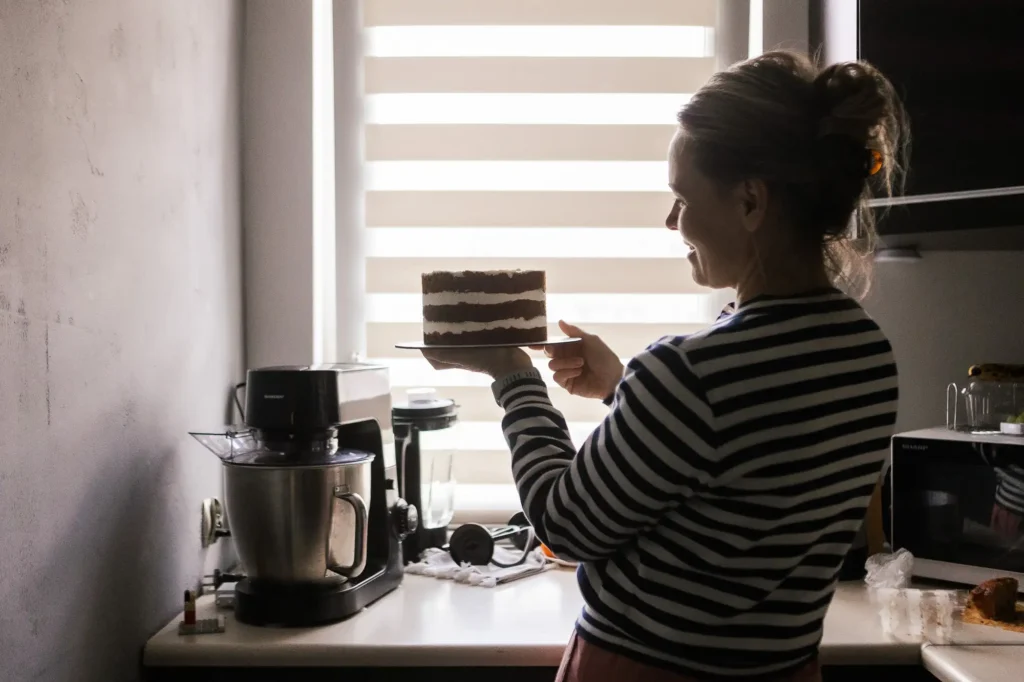
Anna is making this cake to order. It isn’t finished yet—it will look even more beautiful! Photo: Politzek.me
She smiles, looking back on her worries.
– I was a bit scared, to be honest. I was worried it wouldn’t turn out well. The ingredients were unfamiliar, the oven wasn’t mine, and it had been a long time since I’d done any serious baking. But everything worked out. The cake turned out beautiful. I decorated it with berries—in Poland, they are sold year-round and are much cheaper than in Belarus. In the end, the cake vanished in no time. Everyone loved it.
«May My Croissants Get a Hundred Hearts»
Recently, one of Anna’s posts on Threads unexpectedly gathered over five hundred likes.
«May I check in here tomorrow and find that my croissants have gotten a hundred hearts. These are my very first croissants. It was hard, but I did it.»
The experience of imprisonment changes a person’s outlook on many things.
– A lot of material things have become completely unimportant. Money—on its own—has stopped meaning much. The most important thing now is the opportunity to connect with loved ones.
After receiving international protection, a sense of confidence in tomorrow emerged; for the first time in a long while, Anna felt safe. Yet, challenges remain.
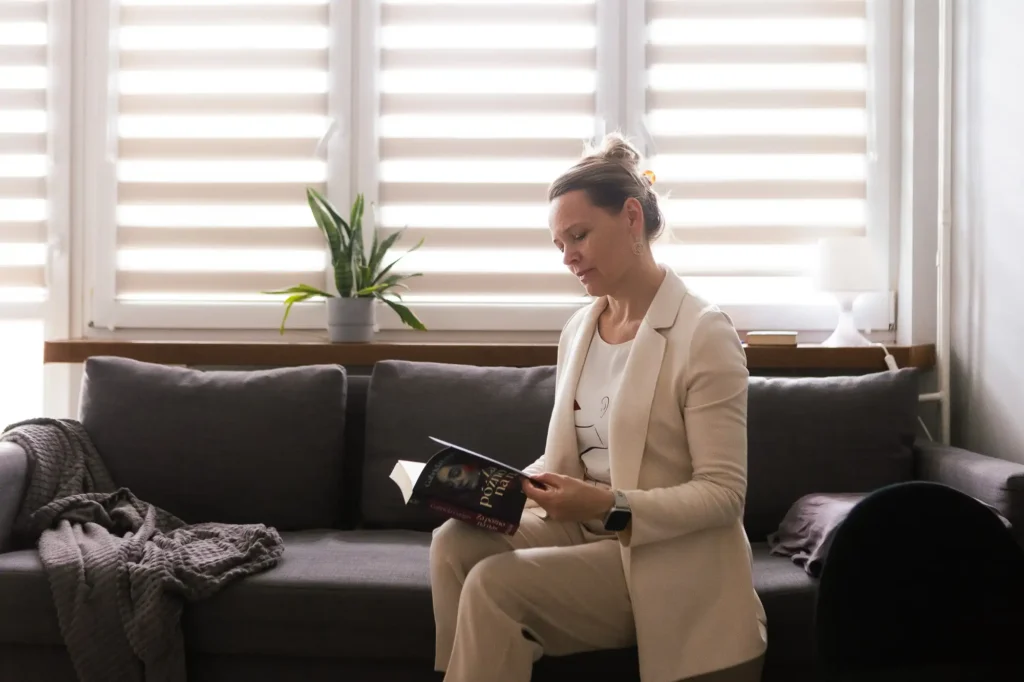
– The hardest part is learning Polish. It’s enough for a grocery run, but not for full, meaningful communication yet. Without the language, you still feel like an outsider. It’s as if you’re a person who can’t speak and is trying to express themselves through gestures. Except, on top of that, I don’t know the gestures either!
Anna is reading a book in Polish. «I bought it to start learning the language.» Photo: Politzek.me
Future plans? At the very least, I want to become a partner in the business where I work now. At the very most—to open my own bakery. Either here or in Belarus. I even know the exact neighborhood in Minsk where I would open it. Well, why not? A person can dream, can’t they?
There is one more dream. A very personal one. I can’t talk about it just yet, or it won’t come true.
You Can’t Just Forget This Experience
People around her often avoid talking about prison. Because of this, Anna rarely speaks about her experience.
– Many people don’t want to listen to stories about the colony. They think it will upset me. But sometimes, quite the opposite, I actually want to share. After all, it is a part of my life. You can’t just cross it out and forget it.
Since her release, Anna has started calling her mother more often.
– My mom wrote letters to me every two or three days. No one else in the world is capable of providing that kind of support and love like a mother. I have finally realized this for good.
«I didn’t go back home. I didn’t go back to my former life. That life is gone. But I am free. And I cherish this deeply.»
– Every single day spent in there was hell for me. Now, I enjoy every minute of life.
Everything will be fine. For all of us. I know it. Because after a dark spell, the light always follows.
Anna Papaj. Photo: Politzek.me
Donating to a former political prisoner who suffered for her solidarity and donations? Now, that is beautiful and fair! It restores faith in humanity.
You can support Anna Papai right now – right here. Your help is vital for those who now find themselves in forced emigration without their loved ones. Anna is just starting her independent life in a foreign country. She works hard, puts in long hours, and people like her rarely ask for help. Any amount will help her feel a bit more secure covering her everyday expenses. This is just one piece of the mosaic of unique stories of Belarusians.
We introduce you to former political prisoners—ordinary people who simply dared to be themselves during a difficult historical time. The time of political prisoners.
We permit full or partial republication of our texts and the use of our visuals. An active, direct hyperlink to the original page is mandatory and must be placed at the beginning of the republished text or social media post. Proper credit to the authors of all photo and video materials is strictly required.